
Thomas E. Williams

Overview
Tom is a registered patent attorney and former rocket engineer who helps clients develop, enforce, defend, and monetize global patent and trademark portfolios. He represents clients in a variety of industries and technologies, including vehicle drive and control systems; motors and pumps/hydraulic systems; refrigeration systems and heat exchangers; electronic flight bag systems; aircraft control systems; propulsion technologies including rocket engines and turbine engines; electromechanical fuel controls; aerial firefighting equipment; consumer products, dispensers, packaging, and displays; electric heating elements for consumer appliances; fire protection garments; Internet and software applications; telecommunications and data encryption technologies; consumer credit and finance technologies; financial services; electronic payment technologies; surgical and dental instruments; health care IT and MRI technologies; and countless software as a service (SaaS) applications.
Career & Education
- Fuel Control Valve Project Manager, Knowles Corporation, 1999–2000
- Gas Turbine Engine Senior Designer/Project Engineer, Rolls-Royce Corporation, 1997–1999
- Rocket Engine Turbomachinery Engineer, The Boeing Company, 1988–1997
- DePaul University College of Law, J.D., 2002
- California State University, Northridge, M.S.M.E., 1995
- Purdue University, B.S.A.A.E., 1988
- Illinois
- U.S. Court of Appeals for the Second Circuit
- U.S. Patent and Trademark Office (USPTO)
Thomas's Insights
Client Alert | 3 min read | 07.02.26
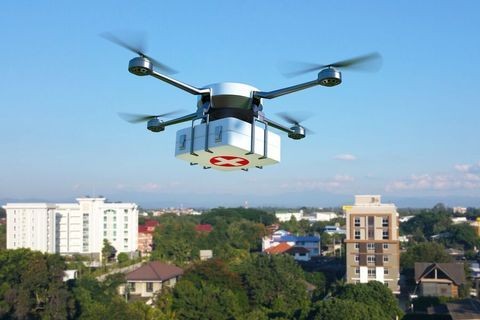
Prohibiting Adversarial Patents Act of 2026 (H.R. 9142): What the Drone Industry Needs to Know
On June 4, 2026, Rep. Scott Fitzgerald (R-WI-5) introduced a bill that would limit the ability of people and entities seen as threats to U.S. national security to obtain and enforce patents. If enacted, the Prohibiting Adversarial Patents Act of 2026 (H.R. 9142) would leverage use of patent law as a national security tool, with consequences for companies operating in technology-intensive sectors, including drones, telecommunications, semiconductors, artificial intelligence, and advanced manufacturing. The proposed legislation, currently under review by the U.S. House Judiciary Committee, is particularly focused on persons and entities with connections to the People’s Republic of China.
Firm News | 2 min read | 05.22.26
Client Alert | 10 min read | 03.19.26
Speaking Engagement | 03.06.26
“Intellectual Property Licensing Recovery: Strategies & Considerations,” Twelfth Annual In-House Recovery Conference, Dana Point, CA
Representative Matters
- RBC Nice Bearings et. al. v. Peer Bearing Company, 3:06-CV-01380 (TLM) (D. Conn.)/10-383 (2nd Cir.) - Assisted in defense of trademark and copyright infringement claims involving ball bearings. Client won partial summary judgment in the district court, which was affirmed on appeal by the Second Circuit. Plaintiff dismissed all remaining claims with prejudice.
- Highway Equipment Company v. Cives Corporation and Monroe Truck Equipment, Inc., C04-147 LRR (N.D. IA) - Assisted in action for declaratory judgment of non-infringement involving truck bodies. Patent owner dismissed all claims with prejudice after a Markman Hearing.
- Miscellaneous Matters: Prevailed on summary judgment and successfully awarded attorney fees in the district of Delaware in trade secrets litigation; district court in a patent infringement lawsuit adopted client’s patent claim construction; negotiated settlement of numerous trademark oppositions.
Thomas's Insights
Client Alert | 3 min read | 07.02.26
Prohibiting Adversarial Patents Act of 2026 (H.R. 9142): What the Drone Industry Needs to Know
On June 4, 2026, Rep. Scott Fitzgerald (R-WI-5) introduced a bill that would limit the ability of people and entities seen as threats to U.S. national security to obtain and enforce patents. If enacted, the Prohibiting Adversarial Patents Act of 2026 (H.R. 9142) would leverage use of patent law as a national security tool, with consequences for companies operating in technology-intensive sectors, including drones, telecommunications, semiconductors, artificial intelligence, and advanced manufacturing. The proposed legislation, currently under review by the U.S. House Judiciary Committee, is particularly focused on persons and entities with connections to the People’s Republic of China.
Firm News | 2 min read | 05.22.26
Client Alert | 10 min read | 03.19.26
Speaking Engagement | 03.06.26
“Intellectual Property Licensing Recovery: Strategies & Considerations,” Twelfth Annual In-House Recovery Conference, Dana Point, CA
Insights



Speaking Engagement | 03.06.26
“Intellectual Property Licensing Recovery: Strategies & Considerations,” Twelfth Annual In-House Recovery Conference, Dana Point, CA
|03.06.26
Practices
Industries
Thomas's Insights
Client Alert | 3 min read | 07.02.26
Prohibiting Adversarial Patents Act of 2026 (H.R. 9142): What the Drone Industry Needs to Know
On June 4, 2026, Rep. Scott Fitzgerald (R-WI-5) introduced a bill that would limit the ability of people and entities seen as threats to U.S. national security to obtain and enforce patents. If enacted, the Prohibiting Adversarial Patents Act of 2026 (H.R. 9142) would leverage use of patent law as a national security tool, with consequences for companies operating in technology-intensive sectors, including drones, telecommunications, semiconductors, artificial intelligence, and advanced manufacturing. The proposed legislation, currently under review by the U.S. House Judiciary Committee, is particularly focused on persons and entities with connections to the People’s Republic of China.
Firm News | 2 min read | 05.22.26
Client Alert | 10 min read | 03.19.26
Speaking Engagement | 03.06.26
“Intellectual Property Licensing Recovery: Strategies & Considerations,” Twelfth Annual In-House Recovery Conference, Dana Point, CA
