
Crowdsourcing Patent Examination with the Patent Prosecution Highway
What You Need to Know
Key takeaway #1
The PPH can be a useful tool for streamlining global prosecution of corresponding patent applications—which in turn can reduce costs and increase the chances of successful prosecution.
Client Alert | 1 min read | 05.15.23
|
The Patent Prosecution Highway (PPH) is a work-share arrangement between the patent offices of different countries. It allows for participating patent offices to share—and thus benefit from—work already performed by other participating patent offices. In short, when a claim (or claims) of a patent application is allowed in a first patent office, a PPH request may be made to fast-track the examination of a corresponding application in a second patent office based on that allowance. So, for example, when a U.S. patent application is allowed, that allowance can be used to fast-track examination in corresponding foreign applications—or vice versa. For U.S. applicants, the USPTO also requires that: (1) the claims of the U.S. application correspond in scope to the allowed claims of the foreign application, and (2) substantive examination of the U.S. application has not yet begun. Other countries’ requirements may differ. Successfully utilizing the PPH can significantly reduce the time it takes for the second patent office to conduct its examination—and it is intended to do just that. While additional benefits may vary from country to country, applications examined under the PPH also generally have higher rates of allowance and suffer less from duplicative examination. | 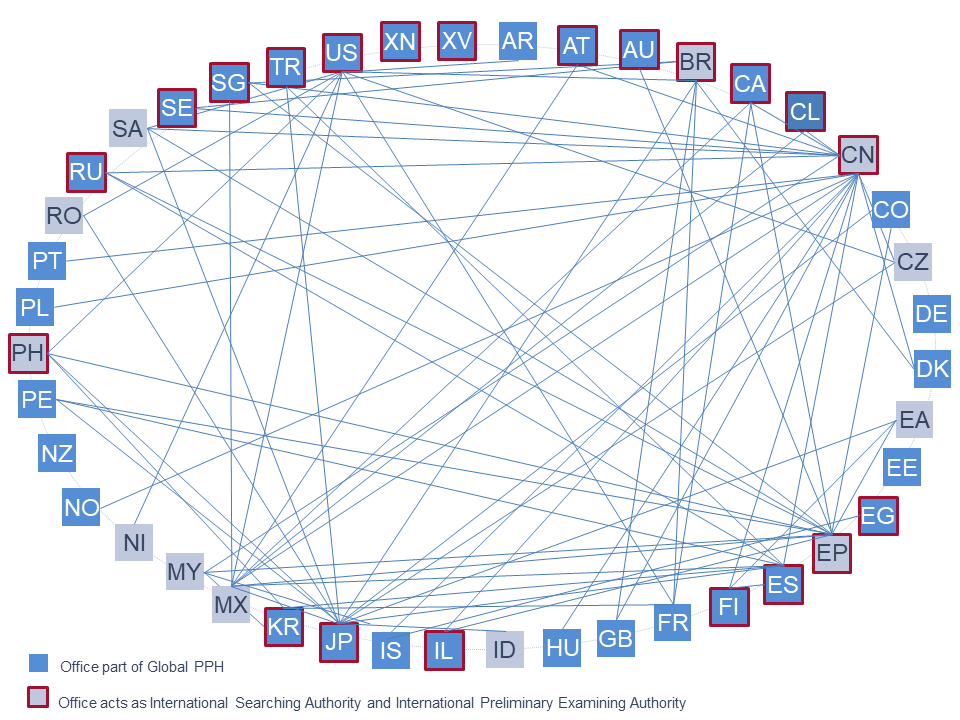 |
These benefits can streamline global prosecution and reduce overall costs for applicants, particularly in view of the ever growing number of countries participating in PPH programs. Presently, the USPTO has PPH agreements with patent offices of the Europe Union, United Kingdom, China, Japan, Taiwan, Mexico, Israel and several other countries and regions.
For additional information on the PPH, including country specific requirements and PPH strategies for your patent portfolio, please contact your trusted partners at Crowell & Moring.
Contacts


Insights

Client Alert | 5 min read | 08.21.26
FTC Proposes Enforcement Policy Statement on Personalized Pricing: What Businesses Need to Know
On August 19, 2026, the Federal Trade Commission (FTC) announced a proposed Enforcement Policy Statement on personalized pricing — the practice of companies using consumers’ personal data to set individualized prices, discounts, coupons, or other incentives. The proposed statement, which is open for public comment for 30 days following publication in the Federal Register, marks a major step up in the FTC’s focus on data-driven pricing strategies and puts businesses across industries on notice that undisclosed or inadequately disclosed personalized pricing will not be tolerated. Importantly, while the proposed statement is not a binding legal requirement and does not create new legal obligations, it serves as an enforcement warning that the FTC is prepared to use its existing enforcement authority under Section 5 of the FTC Act (Section 5) and is also a potential harbinger of rulemaking. Businesses that engage in — or are considering — personalized pricing should carefully assess their disclosure practices and data collection procedures against the standards articulated in this statement.
Client Alert | 7 min read | 08.19.26
CMS’s Final Rule Bans Federal Medicaid Funding for Youth Gender-Affirming Care
Client Alert | 2 min read | 08.19.26
