
Rebecca L. Springer

Overview
Companies rely on Rebecca for expert guidance on complex employment issues that pose significant risks. Whether navigating the ever-changing landscape of diversity, equity and inclusion practices, developing comprehensive pay equity programs, conducting sensitive and high-profile investigations, or providing strategic counsel on federal and state employment laws, Rebecca delivers tailored solutions to her clients’ most pressing concerns.
Career & Education
- The White House
Assistant to the Counselor to the President
- The White House
- Duke University School of Law, J.D.
- Washington University in St. Louis, B.A.
- District of Columbia
- Virginia
Rebecca's Insights
Client Alert | 3 min read | 06.12.26
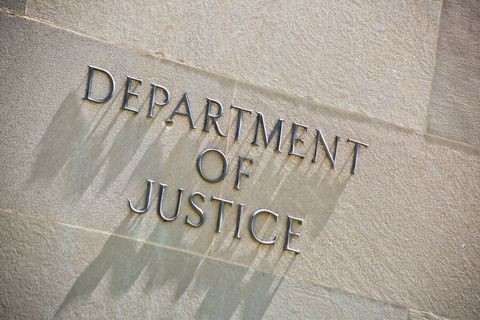
DOJ Guidance Backs Away From Disparate Impact Liability
On June 9, 2026, the U.S. Department of Justice (DOJ) issued a formal opinion concluding that the Equal Opportunity Employment Commission’s (EEOC) existing interpretations of Title VII of the Civil Rights Act of 1964 (Title VII) disparate-impact liability, including the Uniform Guidelines on Employee Selection Procedures (UGESP), are unconstitutional. According to the opinion, EEOC’s prior interpretations contemplate liability based on disproportionately adverse effects alone, without regard to an employer’s likely intent, rather than treating disparate impact as an evidentiary mechanism to “smoke out” intentional discrimination. DOJ found that this approach functions as a “qualified racial-proportionality mandate” that places “a racial thumb on the scales, often requiring employers to evaluate the racial outcomes of their policies, and to make decisions based on (because of) those racial outcomes.” The opinion fulfills one mandate of Executive Order 14281, which rejected disparate-impact liability insofar as it “creates a near insurmountable presumption that unlawful discrimination exists wherever there are any differences in outcomes among different [demographic groups].”
Client Alert | 5 min read | 06.04.26
EU Pay Transparency Directive: The Transposition Deadline is Looming — What Now?
Speaking Engagement | 04.22.26
"Labor and Employment: The Tumultuous Landscape Remains," OOPS 2026, Tyson's Corner, VA.
Insights


- |
09.26.23
Employee Relations Law Journal
OFCCP Launches Three New Initiatives Impacting Its Relationship With Contractors
|05.01.19
Pratt's Government Contracting Law
Labor & Employment – Repeals and Rollbacks are Likely
|05.09.17
Crowell & Moring's Regulatory Forecast 2017
The Pro Bono Effect: Nonprofits, Small Businesses Can Benefit From Training
|01.11.16
Washington Lawyer
- |
04.22.26
Crowell & Moring’s Government Contracts Legal Forum
Déjà Vu? New Executive Order Outlines Restrictions on Contractor and Subcontractor DEI Activity
|04.09.26
Crowell & Moring’s Government Contracts Legal Forum
Reminders for a Potential Government Shutdown this Weekend
|02.03.26
Crowell & Moring’s Government Contracts Legal Forum
Common Questions—and Answers—About A Government Shutdown
|10.01.25
Crowell & Moring’s Government Contracts Legal Forum
- |
08.01.25
Crowell & Moring’s Government Contracts Legal Forum
- |
05.27.15
Crowell & Moring's Government Contracts Legal Forum
Rebecca's Insights
Client Alert | 3 min read | 06.12.26
DOJ Guidance Backs Away From Disparate Impact Liability
On June 9, 2026, the U.S. Department of Justice (DOJ) issued a formal opinion concluding that the Equal Opportunity Employment Commission’s (EEOC) existing interpretations of Title VII of the Civil Rights Act of 1964 (Title VII) disparate-impact liability, including the Uniform Guidelines on Employee Selection Procedures (UGESP), are unconstitutional. According to the opinion, EEOC’s prior interpretations contemplate liability based on disproportionately adverse effects alone, without regard to an employer’s likely intent, rather than treating disparate impact as an evidentiary mechanism to “smoke out” intentional discrimination. DOJ found that this approach functions as a “qualified racial-proportionality mandate” that places “a racial thumb on the scales, often requiring employers to evaluate the racial outcomes of their policies, and to make decisions based on (because of) those racial outcomes.” The opinion fulfills one mandate of Executive Order 14281, which rejected disparate-impact liability insofar as it “creates a near insurmountable presumption that unlawful discrimination exists wherever there are any differences in outcomes among different [demographic groups].”
Client Alert | 5 min read | 06.04.26
EU Pay Transparency Directive: The Transposition Deadline is Looming — What Now?
Speaking Engagement | 04.22.26
"Labor and Employment: The Tumultuous Landscape Remains," OOPS 2026, Tyson's Corner, VA.
