
Kris D. Meade

Areas of Focus
Overview
Compliance with employment laws and regulations is always a challenge — particularly when an employer’s workforce is highly skilled, mobile, and innovation-focused. With an emphasis on technology, consulting, health care, higher education, and other information-driven industries, Kris works with boards of directors and senior corporate leadership to achieve their business goals through development of effective strategies focused on critical areas, including pay equity, the use of artificial intelligence (AI) and machine learning in making employment decisions, developing and maintaining diversity, equity and inclusion (DEI) programs that comply with federal law, and retention of top talent. With regard to DEI, Kris has been conducting full assessments of client DEI programs, including employment programs and supplier diversity programs, to ensure compliance with the Executive Orders (EOs) issued by the current administration, with a particular focus on ensuring clients can certify compliance with all federal anti-discrimination laws.
Career & Education
- The George Washington University Law School, J.D., honors
- University of Michigan, B.A., summa cum laude, Phi Beta Kappa
- District of Columbia
- Maryland
Kris's Insights
Client Alert | 3 min read | 06.12.26
DOJ Guidance Backs Away From Disparate Impact Liability
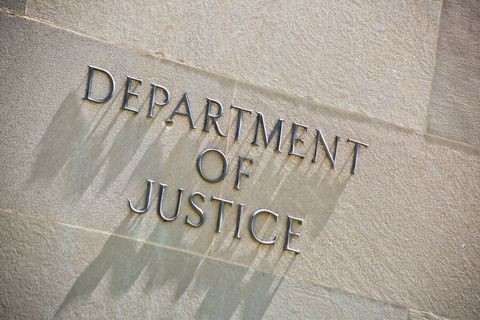
On June 9, 2026, the U.S. Department of Justice (DOJ) issued a formal opinion concluding that the Equal Opportunity Employment Commission’s (EEOC) existing interpretations of Title VII of the Civil Rights Act of 1964 (Title VII) disparate-impact liability, including the Uniform Guidelines on Employee Selection Procedures (UGESP), are unconstitutional. According to the opinion, EEOC’s prior interpretations contemplate liability based on disproportionately adverse effects alone, without regard to an employer’s likely intent, rather than treating disparate impact as an evidentiary mechanism to “smoke out” intentional discrimination. DOJ found that this approach functions as a “qualified racial-proportionality mandate” that places “a racial thumb on the scales, often requiring employers to evaluate the racial outcomes of their policies, and to make decisions based on (because of) those racial outcomes.” The opinion fulfills one mandate of Executive Order 14281, which rejected disparate-impact liability insofar as it “creates a near insurmountable presumption that unlawful discrimination exists wherever there are any differences in outcomes among different [demographic groups].”
Firm News | 7 min read | 06.04.26
Client Alert | 5 min read | 06.04.26
EU Pay Transparency Directive: The Transposition Deadline is Looming — What Now?
Recognition
- Chambers USA: Labor and Employment, District of Columbia, 2020–2026
- The National Law Journal: Crisis Leadership Trailblazer, 2021
- The Best Lawyers in America: Litigation - Labor and Employment, Washington, D.C., 2022–2026
Kris's Insights
Client Alert | 3 min read | 06.12.26
DOJ Guidance Backs Away From Disparate Impact Liability
On June 9, 2026, the U.S. Department of Justice (DOJ) issued a formal opinion concluding that the Equal Opportunity Employment Commission’s (EEOC) existing interpretations of Title VII of the Civil Rights Act of 1964 (Title VII) disparate-impact liability, including the Uniform Guidelines on Employee Selection Procedures (UGESP), are unconstitutional. According to the opinion, EEOC’s prior interpretations contemplate liability based on disproportionately adverse effects alone, without regard to an employer’s likely intent, rather than treating disparate impact as an evidentiary mechanism to “smoke out” intentional discrimination. DOJ found that this approach functions as a “qualified racial-proportionality mandate” that places “a racial thumb on the scales, often requiring employers to evaluate the racial outcomes of their policies, and to make decisions based on (because of) those racial outcomes.” The opinion fulfills one mandate of Executive Order 14281, which rejected disparate-impact liability insofar as it “creates a near insurmountable presumption that unlawful discrimination exists wherever there are any differences in outcomes among different [demographic groups].”
Firm News | 7 min read | 06.04.26
Client Alert | 5 min read | 06.04.26
EU Pay Transparency Directive: The Transposition Deadline is Looming — What Now?
Insights


- |
09.22.25
Employee Relations Law Journal
- |
09.26.23
Employee Relations Law Journal
Pay Equity and Higher Education – A Changing Landscape
|01.24.20
NACUA (National Association of College and University Attorneys) Notes, Vol. 18, No. 3
OFCCP Launches Three New Initiatives Impacting Its Relationship With Contractors
|05.01.19
Pratt's Government Contracting Law
Labor and Employment – The Spotlight Shines on Pay Equity
|01.18.17
Crowell & Moring's Litigation Forecast 2017
Regulatory 2016 - The State of Play
|01.19.16
Crowell & Moring's Regulatory Forecast 2016
Regulatory Forecast 2016: What Corporate Counsel Need to Know for the Coming Year
|01.19.16
a Crowell & Moring LLP publication
District Court finds SEC Regulation on Dodd-Frank Not Entitled To Deference on Whistleblower Protections
|12.10.15
Crowell & Moring's Whistleblower Watch
Regulatory Forecast 2015: What Corporate Counsel Need to Know for the Coming Year
|01.31.15
a Crowell & Moring LLP publication
'Watch List': New Jersey Supreme Court Considers Appeal of Indictment of Whistleblower Who Stole Cache of Confidential Documents to Support Claims
|11.14.14
Crowell & Moring's Health Law Blog
"Ames and the Future of Employment Discrimination Litigation," Webinar
|03.04.26
Amid Belt-Tightening, More Firms Rely On Analytics To Manage Clients' Restructuring Risk
|06.10.20
Legaltech News
- |
04.22.26
Crowell & Moring’s Government Contracts Legal Forum
Déjà Vu? New Executive Order Outlines Restrictions on Contractor and Subcontractor DEI Activity
|04.09.26
Crowell & Moring’s Government Contracts Legal Forum
Reminders for a Potential Government Shutdown this Weekend
|02.03.26
Crowell & Moring’s Government Contracts Legal Forum
Common Questions—and Answers—About A Government Shutdown
|10.01.25
Crowell & Moring’s Government Contracts Legal Forum
- |
08.01.25
Crowell & Moring’s Government Contracts Legal Forum
- |
01.18.17
Crowell & Moring's Government Contracts Legal Forum
Hold That Thought: OFPP Memo Stops FPSW Implementation
|10.26.16
Crowell & Moring's Government Contracts Legal Forum
Stop the Press: District Court Enjoins Implementation of 'Fair Pay and Safe Workplaces,'
|10.25.16
Crowell & Moring's Government Contracts Legal Forum
Fair Pay and Safe Workplaces Final Rule and Guidance Released
|08.25.16
Crowell & Moring's Government Contracts Legal Forum
Practices
- Labor and Employment
- Affirmative Action Plans
- Pay Equity
- Litigation and Trial
- Privacy and Cybersecurity
- Employment Discrimination Counseling and Litigation
- ERISA and Employee Benefits
- Labor Management Relations and Labor Disputes
- Labor and Employment Class Actions
- Whistleblower Investigations
- Government Contracts
- Investigations
- Trade Secrets and Insider Threats Investigations
- Emerging Companies and Venture Capital
- Environmental, Social, and Governance
- Regulatory Litigation
- Labor and Employment Investigations
- DEI in the Workplace
Industries
Kris's Insights
Client Alert | 3 min read | 06.12.26
DOJ Guidance Backs Away From Disparate Impact Liability
On June 9, 2026, the U.S. Department of Justice (DOJ) issued a formal opinion concluding that the Equal Opportunity Employment Commission’s (EEOC) existing interpretations of Title VII of the Civil Rights Act of 1964 (Title VII) disparate-impact liability, including the Uniform Guidelines on Employee Selection Procedures (UGESP), are unconstitutional. According to the opinion, EEOC’s prior interpretations contemplate liability based on disproportionately adverse effects alone, without regard to an employer’s likely intent, rather than treating disparate impact as an evidentiary mechanism to “smoke out” intentional discrimination. DOJ found that this approach functions as a “qualified racial-proportionality mandate” that places “a racial thumb on the scales, often requiring employers to evaluate the racial outcomes of their policies, and to make decisions based on (because of) those racial outcomes.” The opinion fulfills one mandate of Executive Order 14281, which rejected disparate-impact liability insofar as it “creates a near insurmountable presumption that unlawful discrimination exists wherever there are any differences in outcomes among different [demographic groups].”
Firm News | 7 min read | 06.04.26
Client Alert | 5 min read | 06.04.26
EU Pay Transparency Directive: The Transposition Deadline is Looming — What Now?
